Information only. Not legal advice. Laws change and enforcement varies — consult a qualified attorney for your jurisdiction before acting.
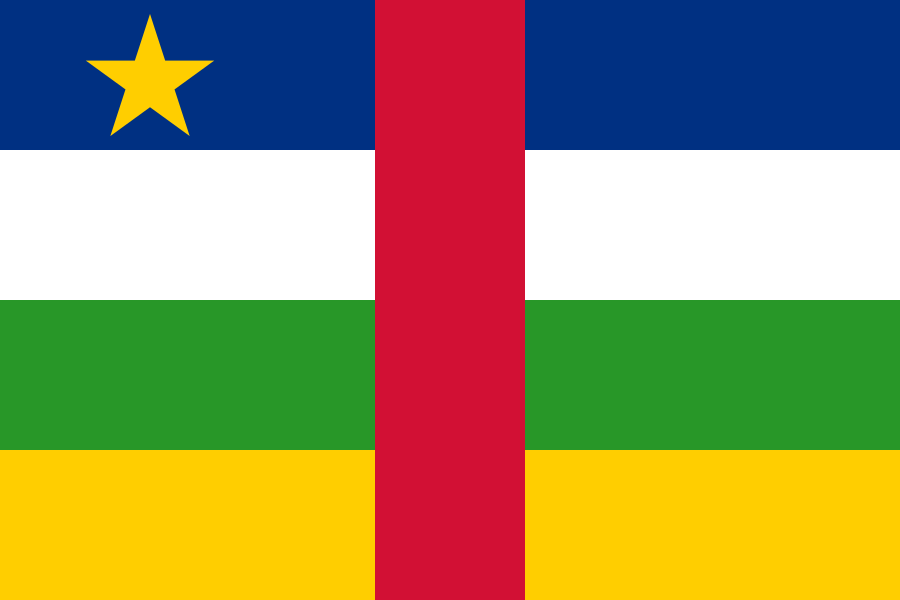
What's Illegal inCentral African Republic?
A trip to Central African Republic comes with a few legal traps that are easy to miss. Of the 21 common items and activities tracked here, 9 are outright illegal and 6 are restricted or conditional. The strictest area for Central African Republic is everyday activities and public behavior, which is the first place to check before you travel.
Most Western governments strongly advise against all travel due to armed-group activity. Drug penalties strict. Photography of military restricted. Diamond / mineral export controlled.
DO NOT BRING
Drug trafficking · Diamond / mineral trafficking · Visiting armed-group zones
What to know before you go to Central African Republic
The single thing worth knowing first: Most Western governments strongly advise against all travel due to armed-group activity. Drug penalties strict. Photography of military restricted. Diamond / mineral export controlled. It is the kind of rule that looks minor at home and becomes a serious problem at the border or in public, which is exactly why it tops this page.
Within everyday activities and public behavior, Central African Republic treats Photography of military/government, Visiting interior conflict zones, and Topless sunbathing as off-limits. Carrying or doing any of these can mean confiscation, fines, or detention depending on the case — and a foreign prescription, habit, or "I didn't know" rarely helps once you are stopped. Each entry below links to the official source it is checked against, with the verified ones marked.
Two things travelers regularly get wrong about Central African Republic: Bangui is partially functional but kidnap risk has been documented for foreigners; and Diamond export requires Kimberley-process certification. Assumptions like these are how otherwise careful visitors end up in trouble, so it is worth checking the specifics rather than guessing.
One important caveat: Most Western embassies have closed or operate from outside the country — consular help severely limited. Laws and their enforcement can shift between regions and over time, so treat this page as a sourced starting point and confirm anything borderline against the official links before you rely on it.
BEFORE YOU GO TO CENTRAL AFRICAN REPUBLIC — 3 STEPS
Confirm the rule with an official Central African Republic source
Laws change. Before you pack, verify anything borderline against UK FCDO CAR advice — the official source we cite for Central African Republic.
Open UK FCDO CAR advice →Carry proof for anything restricted
If you're bringing prescription medication or a regulated device into Central African Republic, carry the prescription, original packaging, and a doctor's note. For controlled medicines, check whether an import permit is required.
Have a backup if something gets held at the border
Know who to call and keep your travel insurance and embassy details handy in case an item is seized or questioned at customs in Central African Republic.
General guidance, not legal advice. How we verify.
COMMON MISCONCEPTIONS
- Bangui is partially functional but kidnap risk has been documented for foreigners.
- Diamond export requires Kimberley-process certification.
JURISDICTION NOTES
- Most Western embassies have closed or operate from outside the country — consular help severely limited.
- Russian / Wagner-linked private military presence has been reported widely.
OFFICIAL SOURCES
IN-DEPTH GUIDES
Information only. Not legal advice. Laws change and enforcement varies — consult a qualified attorney for your jurisdiction before acting.