Information only. Not legal advice. Laws change and enforcement varies — consult a qualified attorney for your jurisdiction before acting.
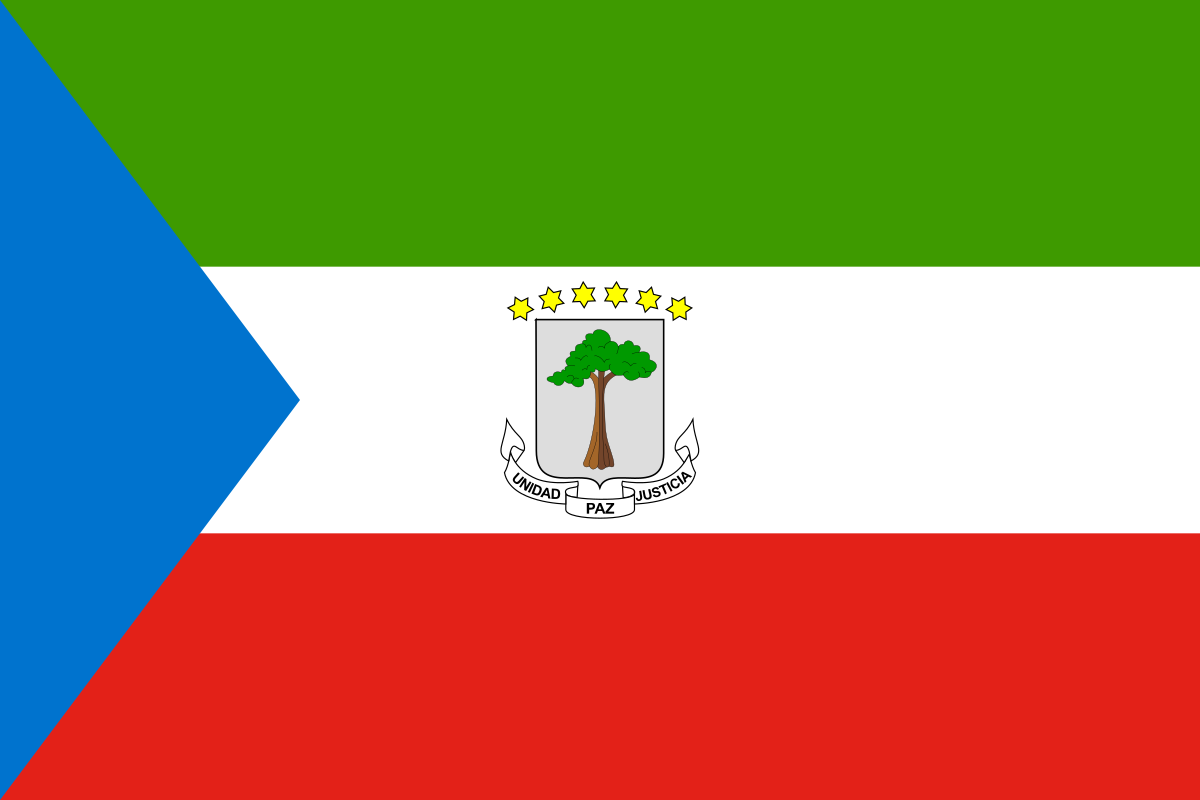
What's Illegal inEquatorial Guinea?
A trip to Equatorial Guinea comes with a few legal traps that are easy to miss. Of the 21 common items and activities tracked here, 10 are outright illegal and 7 are restricted or conditional. The strictest area for Equatorial Guinea is everyday activities and public behavior, so that is where it pays to slow down before you pack or post.
Authoritarian state, longest-serving president in office. Drug penalties strict. Photography heavily restricted. Tourism difficult — visas hard to obtain. Significant security presence on streets.
DO NOT BRING
Drug trafficking · Photography of government · Same-sex relations
What to know before you go to Equatorial Guinea
The single thing worth knowing first: Authoritarian state, longest-serving president in office. Drug penalties strict. Photography heavily restricted. Tourism difficult — visas hard to obtain. Significant security presence on streets. It is the kind of rule that looks minor at home and becomes a serious problem at the border or in public, which is exactly why it tops this page.
Within everyday activities and public behavior, Equatorial Guinea treats Photography of presidential palace / government, Anti-government discussion, and Public displays of affection as off-limits. Carrying or doing any of these can mean confiscation, fines, or detention depending on the case — and a foreign prescription, habit, or "I didn't know" rarely helps once you are stopped. Each entry below links to the official source it is checked against, with the verified ones marked.
Two things travelers regularly get wrong about Equatorial Guinea: Distinct from Guinea, Guinea-Bissau, and Papua New Guinea — different countries; and Oil wealth has not translated to development for most citizens; visible inequality is sharp. Assumptions like these are how otherwise careful visitors end up in trouble, so it is worth checking the specifics rather than guessing.
One important caveat: Spanish is the primary official language (Equatorial Guinea is the only Spanish-speaking African country). Laws and their enforcement can shift between regions and over time, so treat this page as a sourced starting point and confirm anything borderline against the official links before you rely on it.
BEFORE YOU GO TO EQUATORIAL GUINEA — 3 STEPS
Confirm the rule with an official Equatorial Guinea source
Laws change. Before you pack, verify anything borderline against Equatorial Guinea Customs — the official source we cite for Equatorial Guinea.
Open Equatorial Guinea Customs →Carry proof for anything restricted
If you're bringing prescription medication or a regulated device into Equatorial Guinea, carry the prescription, original packaging, and a doctor's note. For controlled medicines, check whether an import permit is required.
Have a backup if something gets held at the border
Know who to call and keep your travel insurance and embassy details handy in case an item is seized or questioned at customs in Equatorial Guinea.
General guidance, not legal advice. How we verify.
COMMON MISCONCEPTIONS
- Distinct from Guinea, Guinea-Bissau, and Papua New Guinea — different countries.
- Oil wealth has not translated to development for most citizens; visible inequality is sharp.
JURISDICTION NOTES
- Spanish is the primary official language (Equatorial Guinea is the only Spanish-speaking African country).
- Foreign visitors typically need an invitation letter for visa application; stays are heavily monitored.
OFFICIAL SOURCES
IN-DEPTH GUIDES
Information only. Not legal advice. Laws change and enforcement varies — consult a qualified attorney for your jurisdiction before acting.